
A Song for Landless Seeds, Parimah Avani
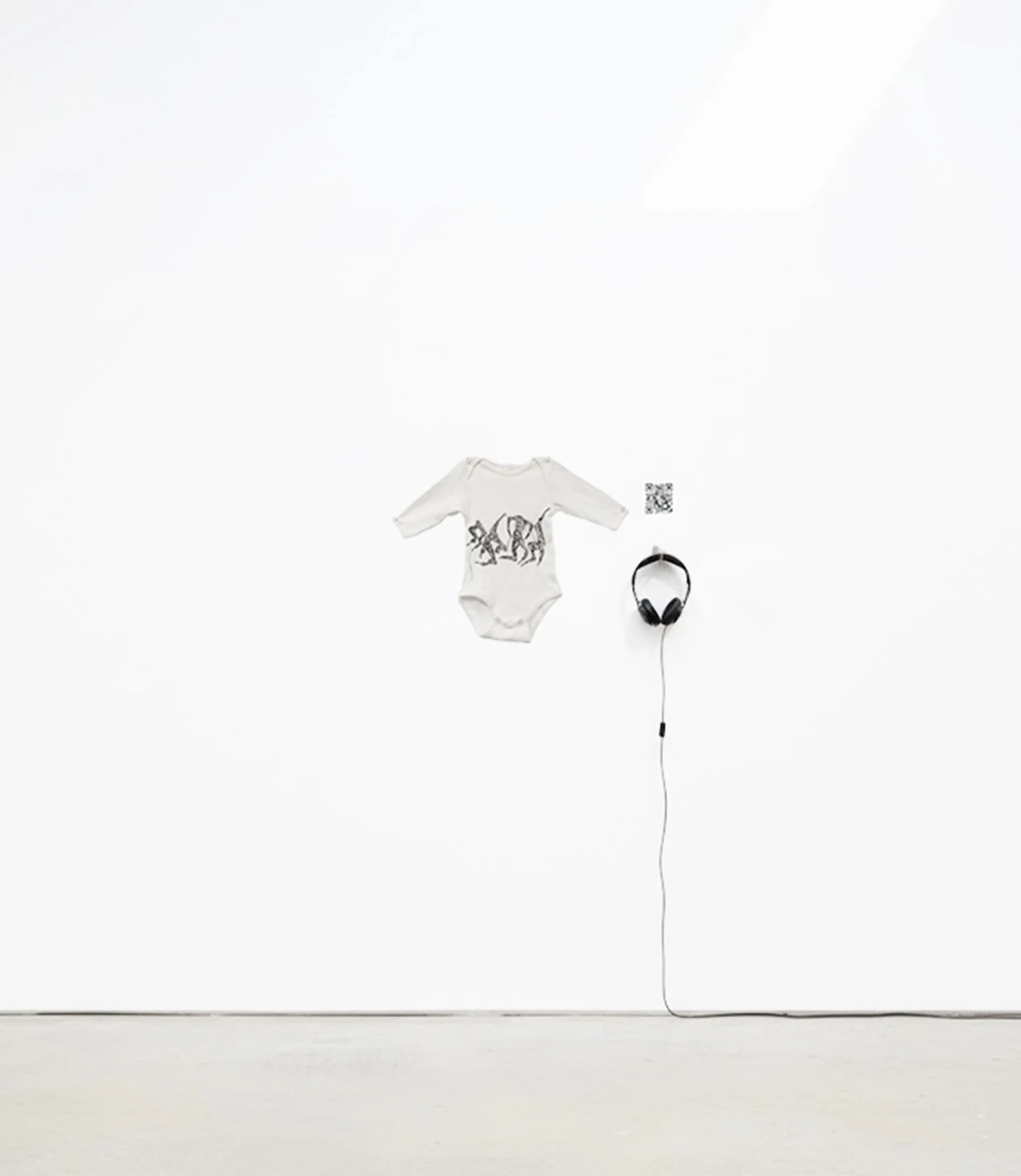
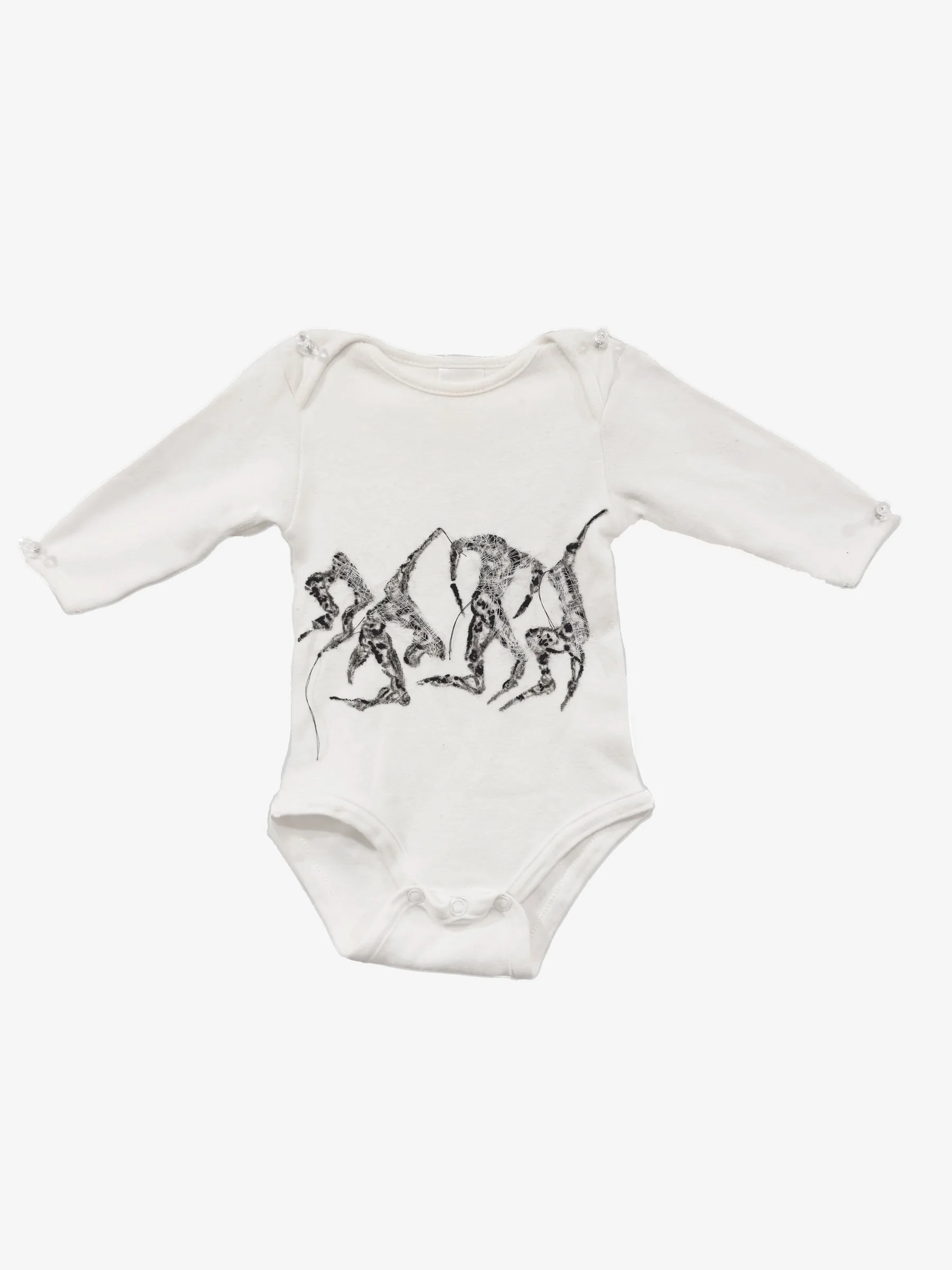
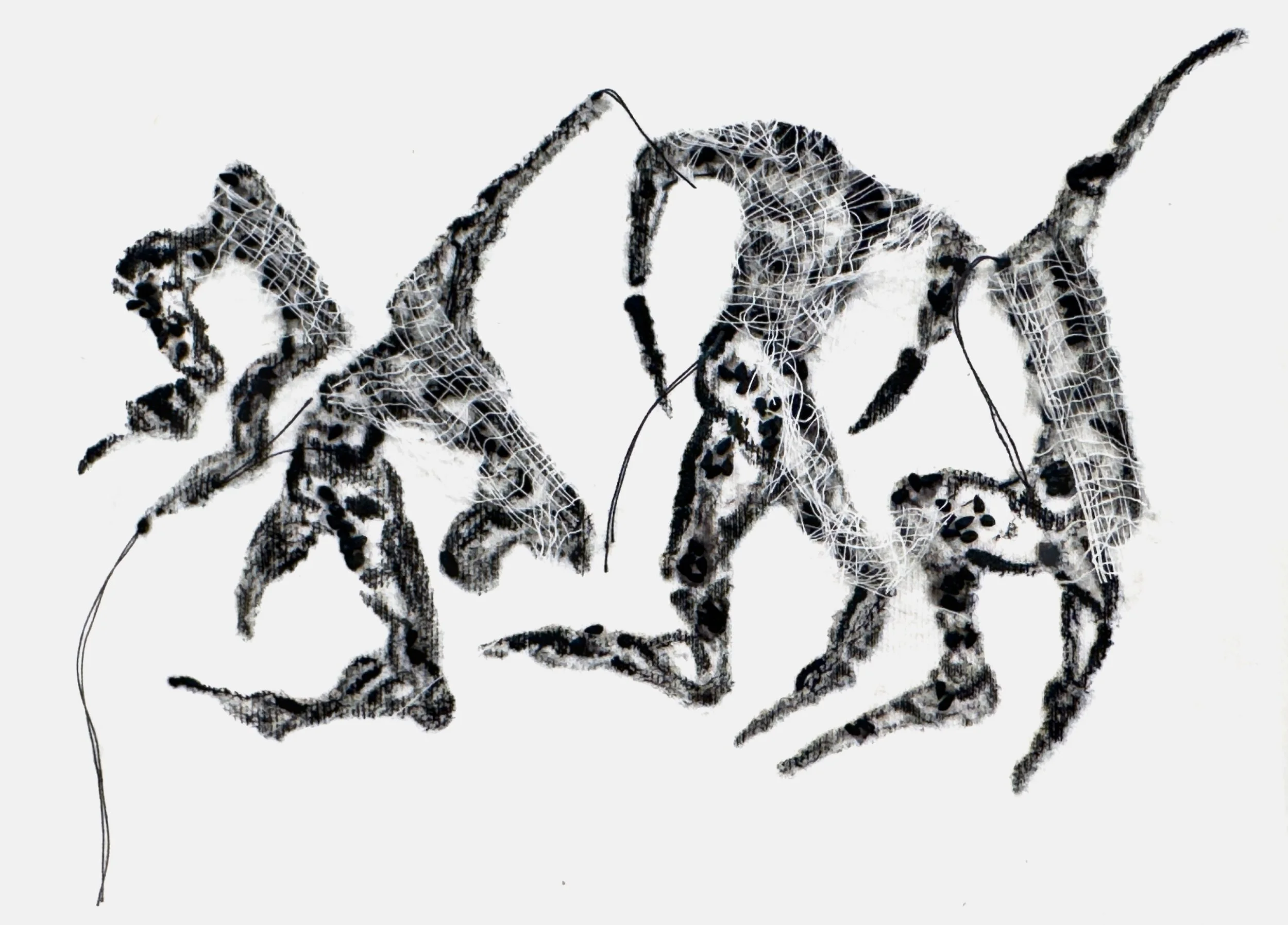
A textile artwork featuring gestural figures on a white newborn baby garment. The composition consists of four dynamic, distorted figures rendered in expressive black ink. Clusters of organic black seeds are embedded into the fabric, secured by intricate, chaotic stitching with black cotton thread. Patches of semi-transparent white gauze are layered over the ink figures and seeds, creating a textured, multi-dimensional surface. The colour palette is strictly monochromatic, contrasting the stark white of the garment and gauze against the deep black of the ink, thread, and seeds.
Title: A Song for Landless Seeds
Artist: Parimah Avani
Date: 2026
Medium/Materials: Newborn garment, gauze, organic black seeds, ink, cotton thread, and single-channel audio (heartbeat)
Dimensions: 35 cm x 45 cm x 1 cm, Sound: 00:01:00 loop
Form/Genre: Sound art, textile art
Key Terms/Subject/Tags: Biomimetic resistance; Decolonial; Obstetric violence
Artist Statement:
Parimah Avani’s works, following a nomadic path, challenge power structures in dominant narratives, political erasure, and oppression. She connects the memory of materials to the identities of places through decolonial approaches by biomimetic and ecological methods. Transparency is a key in Avani's practice, making the invisible visible by referring to hidden narratives, politics of gender and environmental erasures. Inspired by primordial drawings, her pieces feature rebellious gestural entities to manifest human and more-than-human beings’ active force of defiance and revolutionary impulse. Drawn from lived experiences of gendered and racial apartheids, her works question the inherited boundaries between visibility and invisibility. Using ephemeral substances—soil, seeds, and plant powders—Avani activates an urgency of repair to make space for emerging counter-narratives.
This work responds to obstetric violence and bureaucratic erasure, documenting a transition from the 'clinical borders' of Europe to a reclamation of maternal agency in Canada. It challenges thresholds of discriminative care through a newborn’s garment—the smallest architecture of a future—which becomes a site of rebellion against the state’s denial of a child's legal home. Accompanied by a heartbeat—a sound once weaponized without consent to induce guilt—the garment acts as a shield of life and an invisible skin without race. This shift from a Eurocentric obsession with 'blood' (lineage) to an agency of soil (growth) asserts that life is not a permit. Unlike roots, which tie a life to a fixed past, seeds represent a nomadic potentiality; they grow wherever there is soil.
Cultural Context / Story Behind the Work:
As an Iranian artist six months pregnant in Canada, Avani is navigating a transition from the European "politics of blood" to an "agency of soil." This work witnesses the traumatic memory of my first pregnancy in Italy, connecting that loss to her current journey. It challenges dominant systems of oppression and the exclusive bureaucracies that create inequities in the thresholds of care on the woman’s body. This is an existence extinguished within a "jurisdictional womb"—where her body became a battlefield for two systems of erasure.
After fifteen years of residence in Europe, Avani’s existence was deferred to a "clinical border." The Italian state rendered her unborn child a phantom of the law, denying a home to a life not yet born, not having Italian blood. Trapped in a crossfire of religious dogmas, she faced a Catholic-influenced medical system that used the non-consensual, repetitive playing of the heartbeat as a tool of psychological torture to induce guilt. Simultaneously, Avani was directed to a site of gender apartheid—the Iranian Embassy—which refused her child's recognition without her submission to religious matrimony and the stripping of her rights. In that room, the heartbeat became a weapon used to police Avani’s conscience while both systems conspired to deny her child a land.
Avani’s move to Canada is a radical reclamation of agency. These rebellious gestures on a newborn’s garment are a decolonial ritual to reclaim the womb from the state. By using black seeds and ink, she performs a ritual of repair, planting a future where life grows in soil, not in the shadows of inherited blood. She still hears the heartbeat of the lost creature; in this work, that sound is the beat of the baby now inside her, who will be born with a land.
Rights for this Image:
This digital image is licensed under CC BY-NC 4.0. You are free to share it for non-commercial purposes, as long as you credit the artist.
Learn More:
Instagram: @parimahaavani