
Lying In, Helena Wadsley
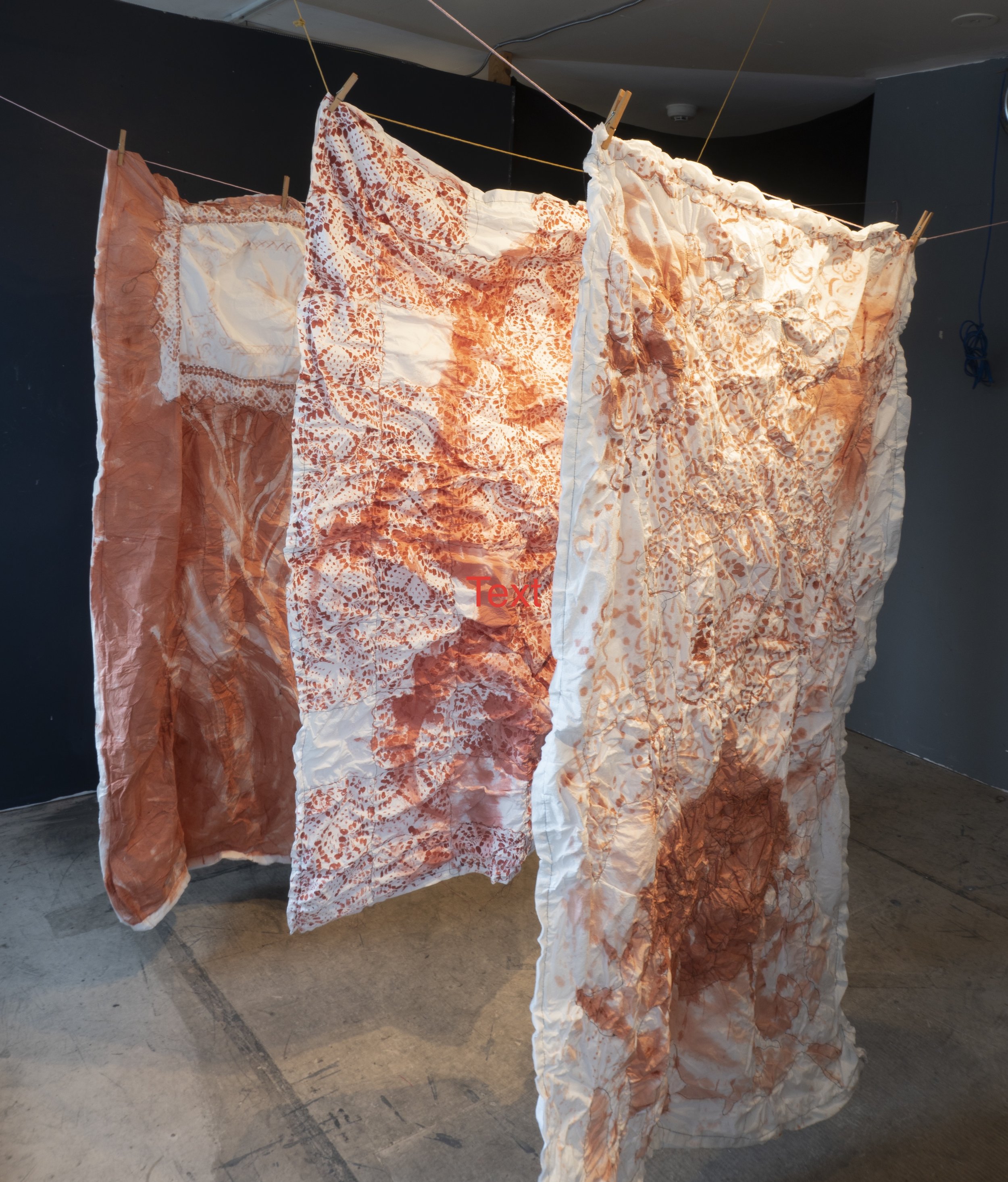
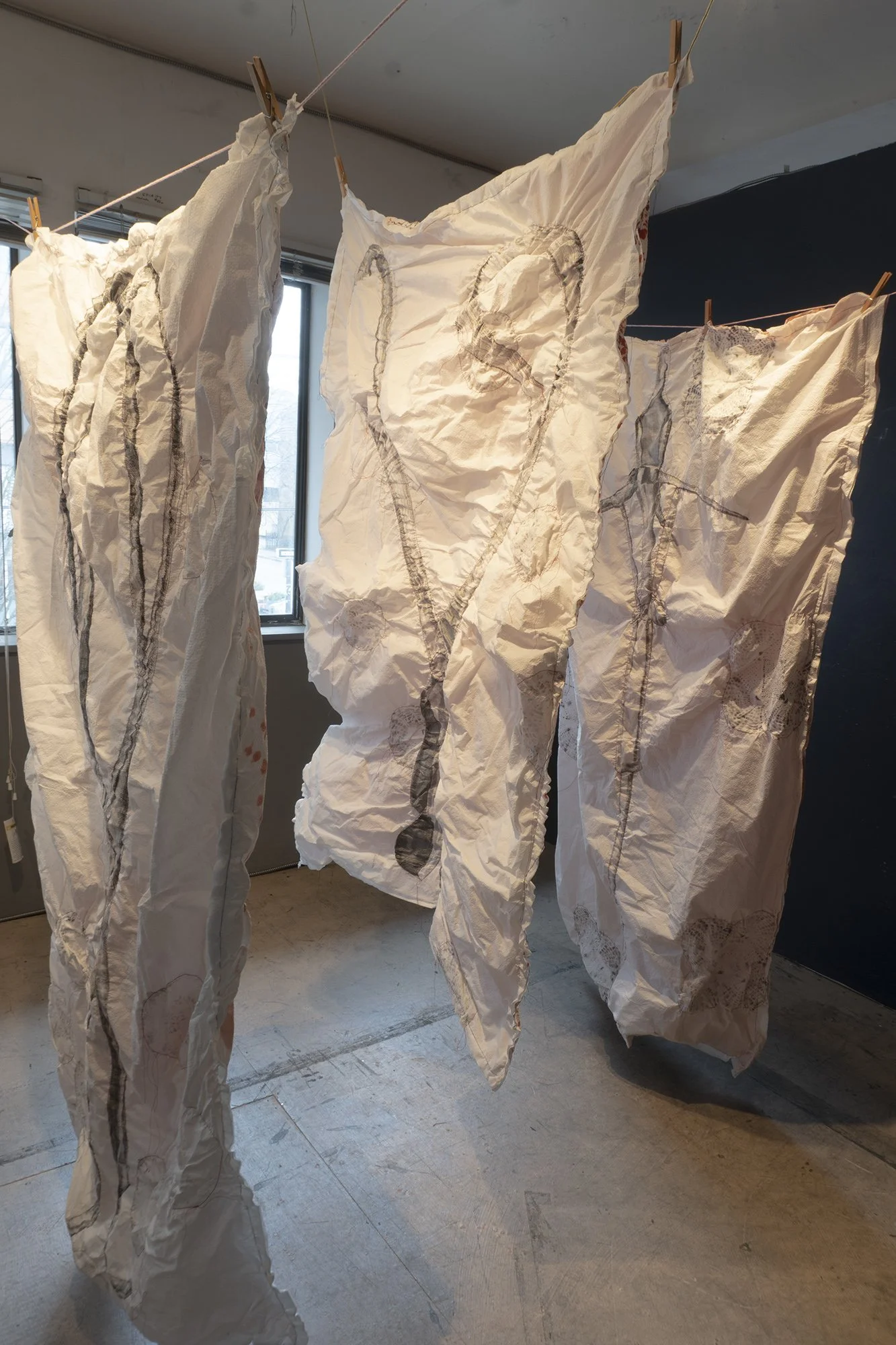
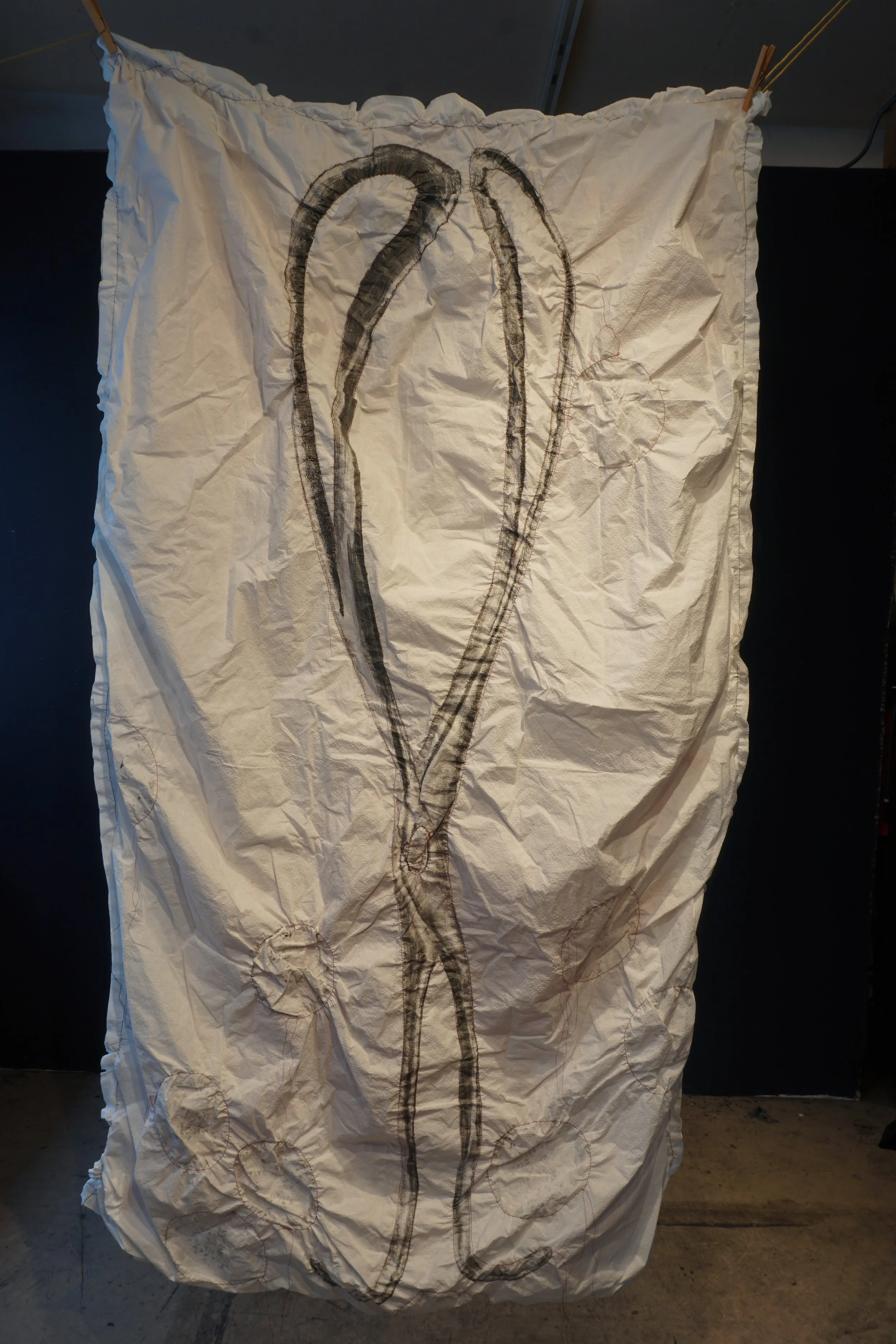
Three paper bedsheets hang as if on a clothesline to dry. They are spaced apart by about half a metre so that the viewer can walk between them. On one side of each is a drawing of an enlarged obstetrics tool—a pair of forceps, which has handles like scissors, and a basiotrope, used for extracting a dead fetus, which is a narrow, pointed instrument with an adjustable handle. The tools are as large as the sheet and are drawn in graphite to emphasize their brutal coldness. On the other side of each quilt is a loose representation of a bed with a lace covering or pillowcase. This side is drawn with sanguine ink, chosen for its warm hue and because it is close to the colour of dried blood. There is some machine embroidery outlining some of the patterns and to join the two sheets together.
Title: Lying In
Artist: Helena Wadsley
Date: 2022
Medium/Materials: Graphite, ink, thread on disposable bedsheets
Dimensions: Three bedsheets, 182 cm x 80 cm each
Form/Genre: Fibre sculpture
Key Terms/Subject/Tags: Comfort; Reproductive system; Gender
Artist Statement:
From the moment we are born, women have been conditioned for motherhood. It remains a common question to ask, never if, but when you will have children. While it seemed to be a woman’s most important task in life, to give birth, the female reproductive system has been inadequately studied, many female-related ailments have been dismissed, while others, such as hysteria, for example, have been invented.
Forceps were invented in the early 17th century by two French Huguenot doctors who made a business out of childbirth, keeping the tool a secret so they could monopolize childbirth where intervention was necessary. A basiotribe, a 19th-century invention, was a tool for removing a dead fetus--a violently intrusive tool used on a woman already suffering.
Helena Wadsley's installation, Lying In, is comprised of three hanging ‘comforters’ made of disposable hospital sheets. They are constructed using scrap fabrics, including lace and embroidery, as a way of acknowledging both types of women’s underacknowledged labour. While mother and infant mortality rates were frighteningly high until fairly recently, and we do have medicine to thank for that, when childbirth entered the realm of medicine, and pregnancy came to be considered an illness, compared to the millennia of midwifery using shared knowledge and compassion, a woman in labour lost agency and a sense of comfort. This piece represents the adaptability of women finding that comfort despite the cold, impersonal tools and care they might be subjected to.
Cultural Context / Story Behind the Work:
This is part of Wadsley’s ongoing series about labour in history. Female reproduction has been misunderstood due to a lack of proper scientific research and prejudices regarding sexuality and conception. The negligence is only now being rectified with, for example, the acceptance of menopause as having treatable symptoms, and midwifery being a more prevalent and respected practice.
Rights for this Image:
This digital image is licensed under CC BY-NC 4.0. You are free to share it for non-commercial purposes, as long as you credit the artist.
Learn More:
Instagram, Facebook, Bluesky: @helenawadsley