Alternative view of 'Glodress', Shannon Wallace
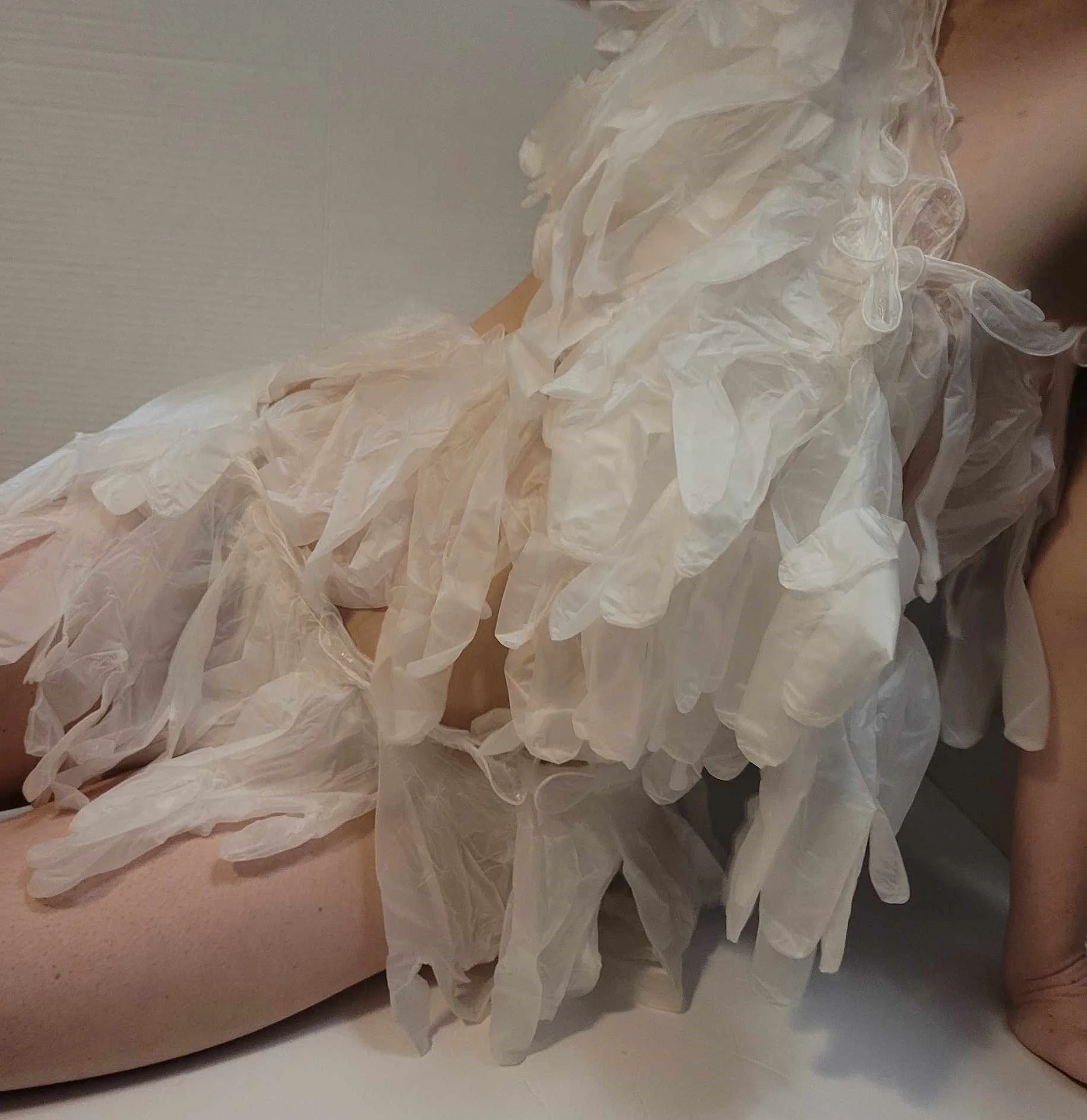
A body with pale skin is covered by a multi-layered wrapping of white gloves, leaving some skin of the chest and abdomen exposed. There is a white and shadowy background.
Title: Alternative view of 'Glodress'
Artist: Shannon Wallace
Date: 2023
Medium/Materials: Photography
Dimensions: 1.52 m x 1.52 m
Form/Genre: Photograph
Key Terms/Subject/Tags: Chronic illness; Medicalized misogyny; Resilience; Feminized pain
Artist Statement:
Gloves are an item that acts as a barrier between skin contact, for a good reason, but they also become an item that signifies boundaries, fears of touch, the necessity of distance, and contagion. The presence of the medical workers' hands is felt through their discarded life-saving tool—the glove. When you entered life, the first hands to touch you were probably those wrapped in latex medical gloves. Throughout life, so many people examine and assist you while wearing these gloves, and the same happens after death, too. This sterile material has found new life in playful fashion designs, while remaining a poignant reminder of the life sterility helps to create.
Cultural Context / Story Behind the Work:
The source of inspiration behind the work accumulated over Shannon Wallace’s lifetime while witnessing the heartbreak in healthcare. She has a special-needs relative she has watched go through the medical system with hospitalizations, and then Wallace developed chronic pain/illness during her adolescence. Wallace thought about how many working hours it took to keep them alive—how many times they were touched and by how many hands. The texture of the latex gloves, appearing like wrinkled and decaying skin, stuck out to her in many instances as Wallace felt her life force drain from her. The doctors will leave the clinic with their used gloves already forgotten, much like patients left for years on waiting lists.
The sensuality and playfulness of the design of Wallace’s work emphasize femininity and reference the gendered connotations of caregiving. In the face of unfixable prognoses and pain, Wallace felt she was perceived as an "emotional woman" rather than a patient. Stereotypes contaminate the way one is perceived and create barriers to care. The body's gendered presentation itself is a barrier to being fully seen individually, even medically.
Rights for this Image:
This digital image is licensed under CC BY-NC 4.0. You are free to share it for non-commercial purposes, as long as you credit the artist.
Learn More:
Instagram: @amethystditch