
Patency 3, Andrew Ackerman
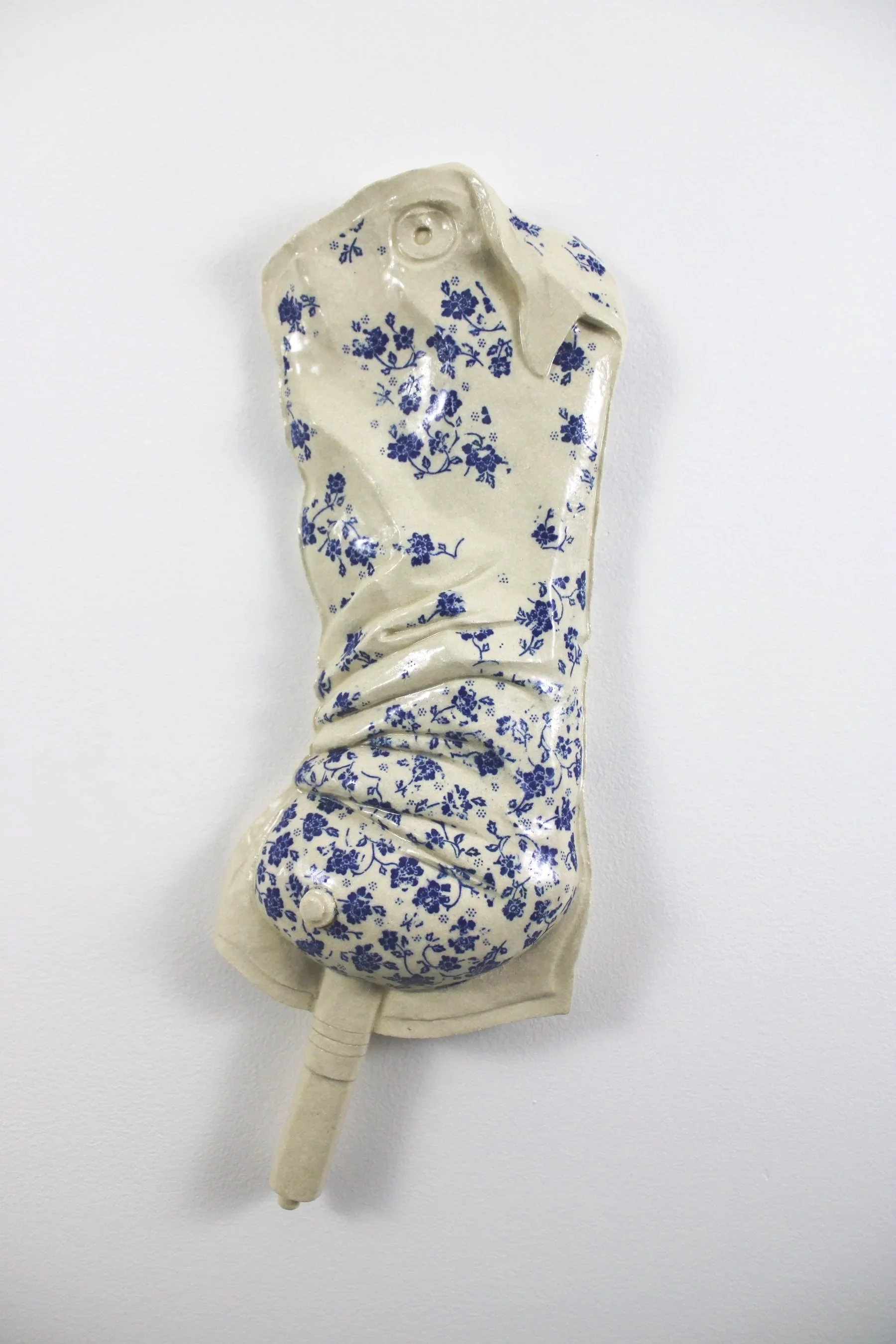
Patency 3 is a wall-mounted ceramic sculpture of an intravenous bag. The object is white and covered with a decorative blue floral design that was applied to the clay as an underglaze transfer. The pattern appears uniform on the lower section of the object but begins to fragment and dissolve in the upper sections. The form of the IV bag is modelled to suggest that it is half full of fluids, exhibiting a slight bulge in the lower section of the form, while appearing to deflate or collapse in the upper sections. The deflation of the form is enhanced by hand-modelled folds in the mid-section of the IV bag.
Title: Patency 3
Artist: Andrew Ackerman
Date: 2025
Medium/Materials: Ceramic
Dimensions: 43 cm x 15 cm x 5.5 cm
Form/Genre: Ceramic
Key Terms/Subject/Tags: Heart surgery; Care; Recovery; Resilience; Patient experience
Artist Statement:
This artwork, Patency 3, is a wall-mounted ceramic sculpture of an intravenous bag. The piece was inspired by Andrew Ackerman’s experience with open-heart surgery and was created during an artist residency at the Guldagergaard International Ceramic Research Centre in Denmark, in 2025.
The IV bag was a constant companion during Ackerman’s surgery and subsequent recovery, which coincided with the COVID-19 pandemic. Much of his time was spent alone and in isolation, and the object became a symbol of his vulnerability and total reliance on others. It also came to represent the care, compassion, and brief moments of connection he experienced with medical staff.
The surface design is reminiscent of patterns from the domestic sphere and is meant to evoke notions of comfort, care, and the familial. Sections of pattern appear to fragment, dissolve, or erode, reflecting the fleeting moments of connection described above, the frailty of the corporeal body, and the separation of family.
The sculpture was intentionally conceived as a ceramic object. Ackerman is fascinated by the physical characteristics of clay – its inherent fragility as well as its potential for strength and resilience. Clay also serves as a repository of memory through its ability to retain incidental marks and traces. These physical qualities embody many of the thoughts and feelings he connects with his experience, and in that sense, relates the project to themes of ‘embodied states’ and ‘thresholds of care & identity’ that support the conceptual framing of the exhibition, Unsilenced Stories: Art as Witness in Health Research.
Cultural Context / Story Behind the Work:
The project is based on Ackerman’s personal experience undergoing heart surgery in 2021 during the COVID-19 pandemic. The sculpture was created during a month-long artist residency at the Guldagergaard International Ceramic Research Centre in Denmark.
Rights for this Image:
This digital image is licensed under CC BY-NC 4.0. You are free to share it for non-commercial purposes, as long as you credit the artist.
Learn More:
Instagram: @andrewackermanstudio