
Resisting Erasure, Ibrahim Rashid
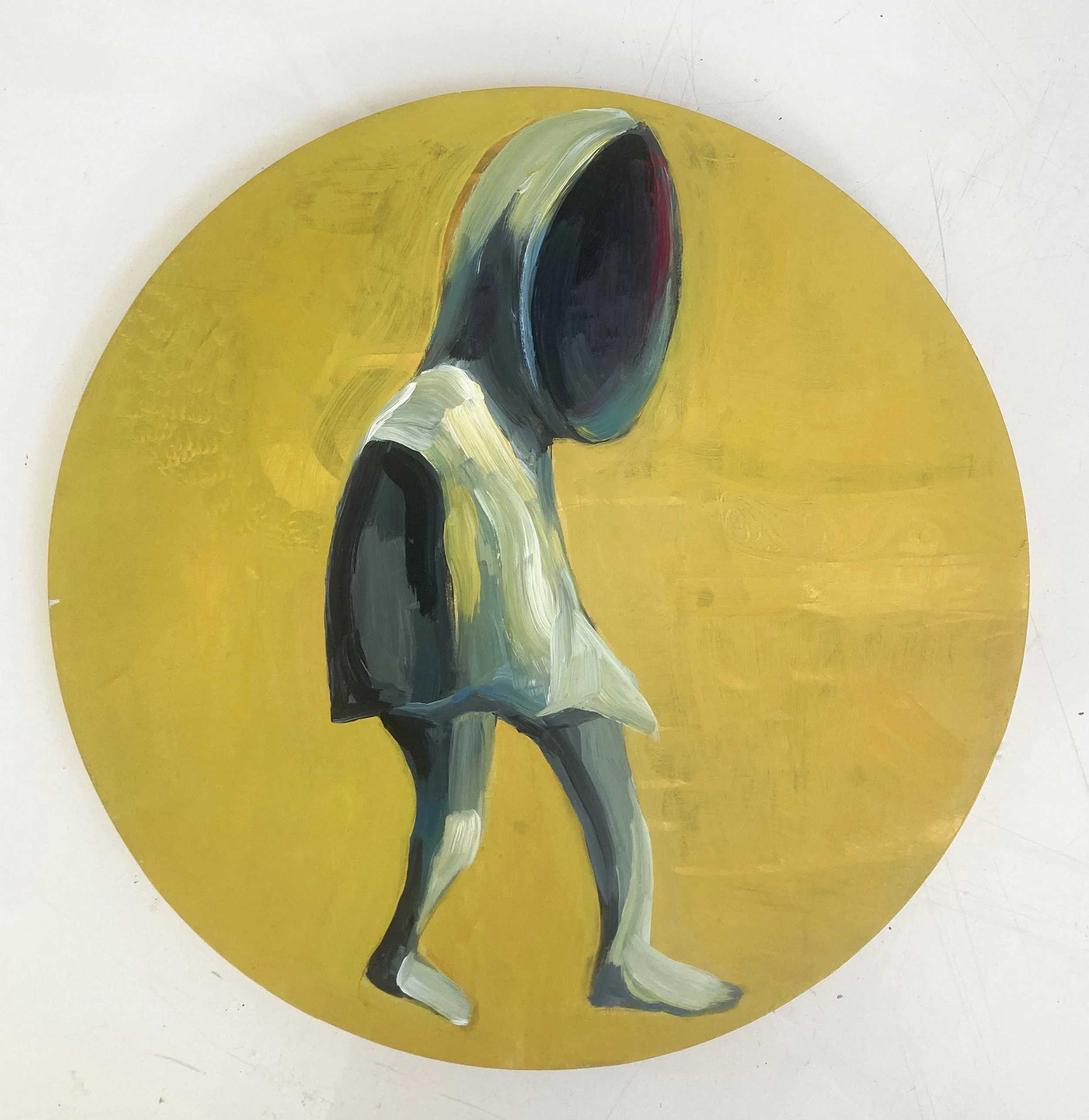
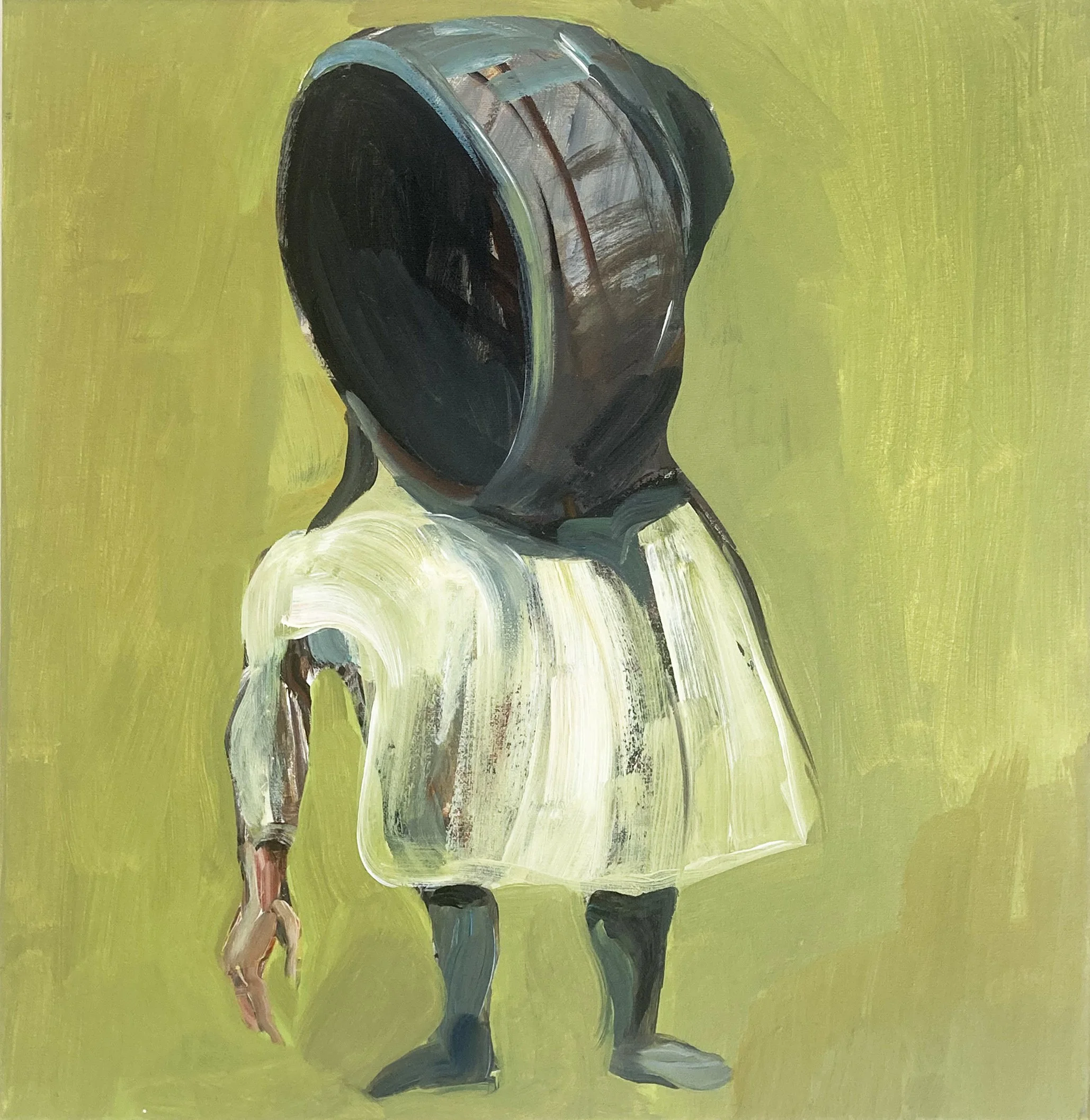

Resisting Erasure is a series of three acrylic paintings of varying sizes, each depicting a stylized human-like figure. The figures appear in different poses and states of movement, occupying simplified, minimal backgrounds. Forms are elongated and partially abstracted, with smooth, rounded heads and simplified limbs. Surfaces show visible brushstrokes and layered paint application. The colour palette varies across the works, combining bold fields of colour with contrasting darker and lighter tones within the figures. Hybrid shapes and symbolic elements appear integrated into or surrounding the bodies. The compositions are sparse, with figures centrally positioned and negative space emphasized. Edges are soft and painterly rather than sharply defined. The overall presentation focuses on the interaction between figure, colour field, and surrounding space, with each painting visually connected through repeated forms and compositional structure.
Title: Resisting Erasure
Artist: Ibrahim Rashid
Date: 2025-2026
Medium/Materials: Acrylic paint
Dimensions: 71 m diameter, 46 cm x 46 cm, 36 m x 28 m
Form/Genre: Painting
Key Terms/Subject/Tags: Embodiment; Biopolitics; Resilience; Cultural erasure; Memory
Artist Statement:
Resisting Erasure examines the body as a site where power, memory, and identity converge. Rooted in lived experience under war, a totalitarian regime, and shaped by contemporary systems of surveillance and medical technology, the work reflects on how power defines, measures, and regulates human life.
In the winter of 2019, Ibrahim Rashid underwent an MRI brain scan in Toronto while seeking the cause of his hearing loss. Enclosed within a narrow cylindrical chamber, my body was mapped by invisible magnetic fields. The machine’s pulse translated flesh into data—measured, classified, archived—reducing lived experience to image. Yet internally, another process unfolded: memory surfaced as a fragile, embodied archive resisting disappearance.
This encounter deepened Rashid’s awareness of the body as both agent and object; cared for, yet scrutinized; vulnerable, yet subject to systems of power. The medical devices reflected structures he had experienced in Iraq, where governance extended into private life, shaping identity and erasing history. In this sense, care and control intertwine on a single threshold, as Foucault explored in his concept of political and biological power.
Through his paintings, Rashid explores embodied states in which hybrid figures emerge, where fragility meets resilience and silence wrestles with testimony. His early work as a registrar in an X-Ray medical unit during the Gulf War exposed him to the radiographic images of wounded soldiers, revealing what remains invisible from the outside and how images can carry both individual and collective narratives. Inspired by Ibn Rushd’s belief that thought cannot be suppressed—“ideas have wings”—Rashid’s artwork portrays art as an act of resistance and healing: a space where memory remains, and imagination challenges the structures of erasure.
Cultural Context / Story Behind the Work:
N/A
Rights for this Image:
This digital image is licensed under CC BY-NC 4.0. You are free to share it for non-commercial purposes, as long as you credit the artist.
Learn More:
Instagram: @theibrahimrashid